program overview
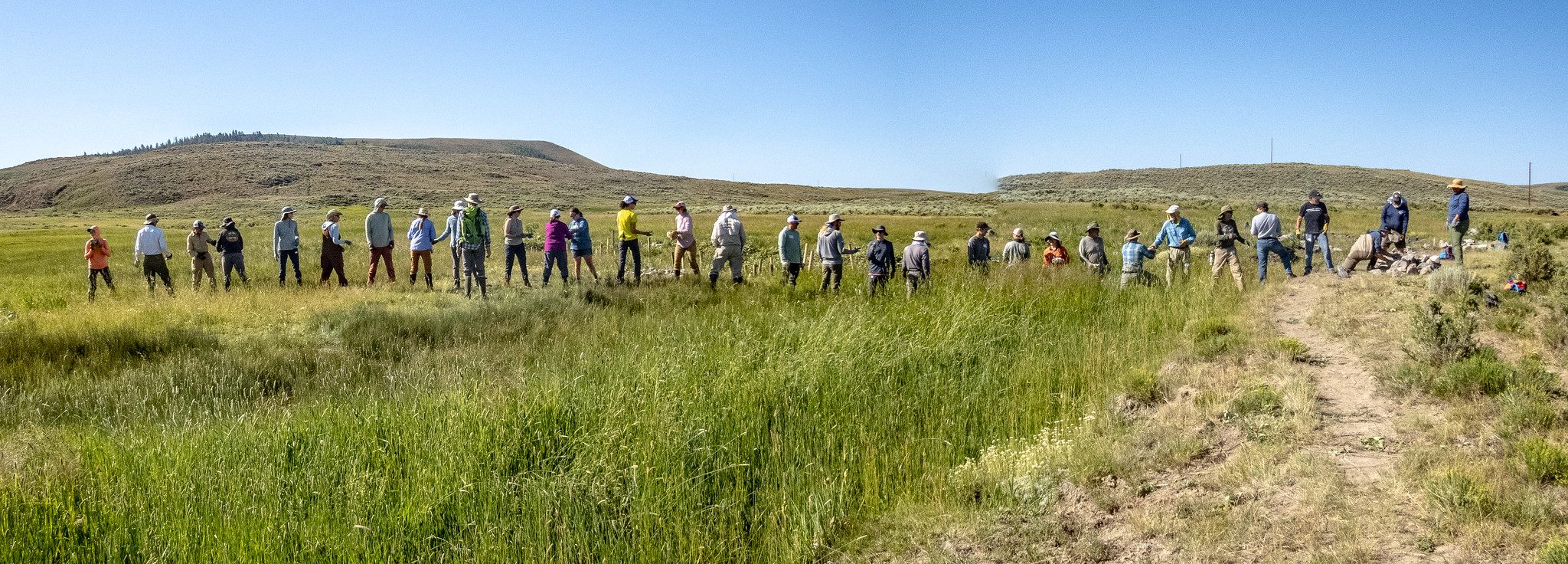
Our cherished natural lands need our help! Whether it’s restoring sensitive alpine areas, rehabilitating parklands, or creating wet meadows in arid landscapes across Colorado, WRV is healing the land while building a community dedicated to the care of our natural resources. WRV specialties in our Natural Habitats program include improving wet meadow habitat for sage-grouse and other wildlife by building rock structures, closing and revegetating non-sanctioned roads, and restoring alpine tundra from over-use.
Volunteer opportunities are posted on our calendar, where you can browse upcoming projects, view details, and sign up based on your interests, location, and availability.
An example of WRV’s climate resilience work are projects improving wet meadow habitat for Sage Grouse and other wildlife. Since 2014, we’ve been installing rock structures in incised streams to stop erosion and redirect water flows into the surrounding meadows, recreating wetland conditions. The Colorado Natural Heritage Program reported a 70% increase in wetland plant cover following this work, and in 2019 WRV and our partners from the Gunnison Climate Working Group received a ‘Climate Adaptation Leadership Award’ from the National Association of Fish & Wildlife Agencies.
Learn more about WRV’s Wet Meadow restoration work in our StoryMap:
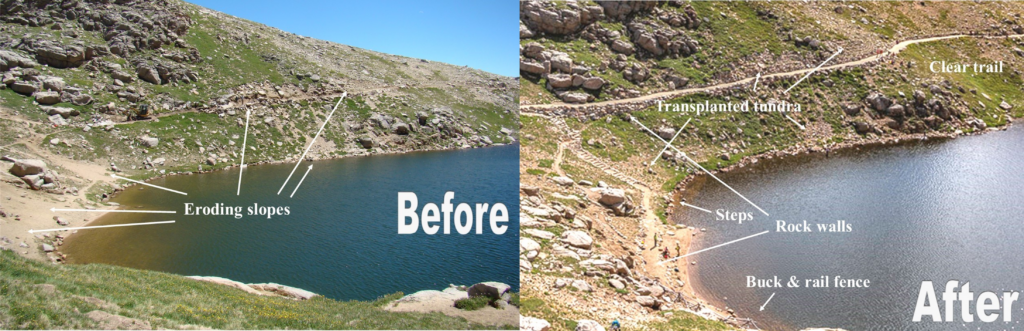
Summit Lake is a scenic and botanical gem. Accessed via the nation’s highest-elevation highway up 14,000-foot Mount Blue Sky (formerly Mount Evans), it is also a tourism magnet. Since 2010, WRV and partners Denver Mountain Parks have remade this area and kickstarted the regeneration of the alpine tundra in disturbed and trampled areas. Volunteers began by converting the eroding trails and viewpoints to an ADA-accessible trail, with rock walls and rock steps containing and directing visitor traffic.
Learn about our results restoring alpine tundra at Summit Lake in the WRV newsletter.
Did you know that WRV projects help the climate?
It’s true! Many of WRV’s projects benefit the climate by helping to capture and store carbon, reduce erosion, and retain water in our dry western landscapes. When WRV restores a forest or grassland, the growing plants take carbon from the air and put it into leaves, trunks, and roots. New plants also protect the soil from eroding, which keeps carbon from going back into the air.
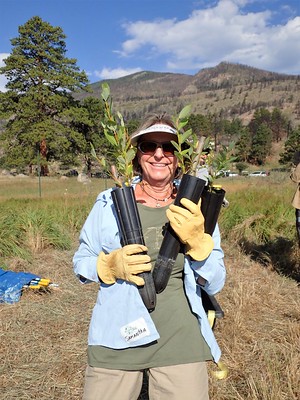
Any time you participate in a project that involves planting – be it willow poles or Ponderosa pines – you’re helping pull carbon out of the atmosphere and store it in the soil. Many people think of planting trees to capture carbon, but wetlands are actually the unsung hero of carbon sequestration! Wetlands store more carbon and for longer periods of time than forests. Wetlands also help recharge groundwater, making surrounding ecosystems more resilient to drought.
Whenever possible WRV uses locally sourced plants, wood, and rock; carpools volunteers to event sites, and offers vegetarian meal options. Also, many projects give more climate-helping details at the lunch time talk. Come see what your local restoration group is doing to help the climate!


Contact:
Morgan Crowley & Nate Boschmann, WRV Habitats Program Directors